
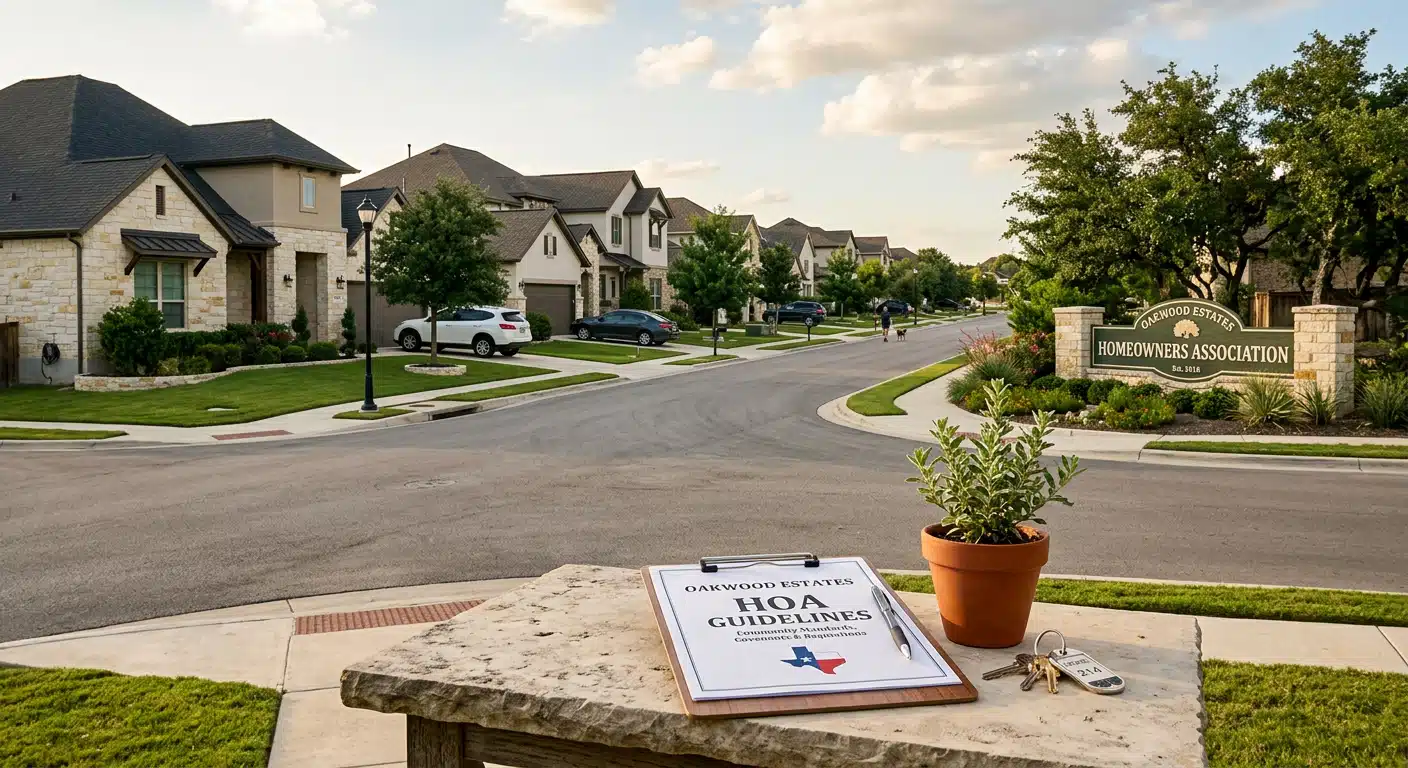
If you’re buying a home in Texas — especially in San Antonio, Boerne, New Braunfels, Cibolo, or any of the fast growing suburban areas — chances are you’ll come across neighborhoods with a Homeowners Association, commonly known as an HOA.
For some buyers, HOAs offer peace of mind, beautiful neighborhoods, and great amenities. For others, they raise questions about rules, fees, and restrictions. Whether you love the idea of a structured community or you’re unsure how HOAs work, understanding the basics is essential before you buy.
This guide breaks down everything you need to know about HOAs in Texas — what they do, what they cost, what they regulate, and how to decide whether an HOA community is right for you.
What Is an HOA?
A Homeowners Association (HOA) is an organization that manages and maintains a residential community. When you buy a home in an HOA neighborhood, you automatically become a member and agree to follow the community’s rules and pay HOA dues.
HOAs are common in:
• New construction communities
• Master planned neighborhoods
• Townhome and condo developments
• Suburban subdivisions
• Gated communities
Their purpose is to protect property values, maintain shared spaces, and create a consistent, well kept environment.
What Does an HOA Do?
HOAs handle a wide range of responsibilities depending on the community. Here are the most common:
1. Maintain Common Areas
This includes:
• Parks
• Playgrounds
• Pools
• Clubhouses
• Greenbelts
• Walking trails
• Landscaping at entrances
These amenities are funded by HOA dues.
2. Enforce Community Rules (CC&Rs)
HOAs operate based on a set of rules called:
• CC&Rs (Covenants, Conditions & Restrictions)
• Bylaws
• Community guidelines
These rules help maintain consistency and protect property values.
3. Manage Community Finances
HOAs collect dues and use them to:
• Pay for maintenance
• Fund repairs
• Build reserves
• Cover insurance for common areas
A well managed HOA has strong financial reserves.
4. Approve Exterior Changes
Most HOAs require approval for:
• Exterior paint colors
• Fences
• Landscaping changes
• Sheds
• Pools
• Solar panels
• Patio covers
• Driveway extensions
This ensures the neighborhood maintains a cohesive look.
5. Provide Amenities
Many HOA communities offer:
• Pools
• Fitness centers
• Sports courts
• Dog parks
• Community events
• Security gates
These amenities can enhance your lifestyle and increase resale value.
How Much Are HOA Fees in Texas?
HOA fees vary widely depending on the community and amenities.
Typical HOA Fees in Texas:
• Single family homes: $25–$150 per month
• Townhomes/condos: $150–$400+ per month
• Master planned communities: $50–$200 per month
What Affects the Cost?
• Number of amenities
• Size of the community
• Age of the neighborhood
• Level of maintenance required
• Whether the HOA includes front yard landscaping
In San Antonio, most single family HOAs fall on the lower end of the national average.
What Do HOA Fees Cover?
HOA dues typically cover:
• Landscaping of common areas
• Pool maintenance
• Park and playground upkeep
• Community events
• Security gates
• Street lighting
• Trash or recycling (in some communities)
• Insurance for common areas
• Reserve funds for future repairs
Townhome and condo HOAs may also cover:
• Exterior maintenance
• Roof repairs
• Building insurance
• Pest control
• Water or sewer
Always review the HOA documents to understand exactly what’s included.
Pros of Living in an HOA Community
HOAs offer several benefits that many homeowners appreciate.
1. Well Maintained Neighborhoods
HOAs ensure:
• Clean common areas
• Consistent landscaping
• Maintained amenities
• Attractive entrances
This helps protect property values.
2. Access to Amenities
Many HOA communities offer:
• Pools
• Fitness centers
• Trails
• Sports courts
• Clubhouses
These amenities can save you money on gym memberships or recreation costs.
3. Higher Resale Value
Homes in HOA communities often:
• Sell faster
• Appeal to more buyers
• Maintain consistent curb appeal
Buyers appreciate the structure and upkeep.
4. Community Standards
HOAs prevent:
• Neglected yards
• Broken fences
• Abandoned vehicles
• Unapproved exterior changes
This keeps the neighborhood looking clean and cohesive.
5. Social Opportunities
Many HOAs host:
• Holiday events
• Pool parties
• Community garage sales
• Neighborhood gatherings
These events help build community.
Cons of Living in an HOA Community
HOAs aren’t for everyone. Here are potential drawbacks.
1. Monthly or Annual Fees
HOA dues are an added cost on top of your mortgage, taxes, and insurance.
2. Rules and Restrictions
Some buyers feel limited by:
• Paint color restrictions
• Fence height rules
• Parking limitations
• Landscaping requirements
• Limits on rentals
If you prefer full freedom, an HOA may feel restrictive.
3. Approval Process for Changes
Want to add a shed, paint your home, or install a pool?
You’ll likely need HOA approval — and the process can take time.
4. Potential for Fines
If you violate community rules, the HOA may issue:
• Warning letters
• Fines
• Penalties
Most HOAs prefer cooperation over punishment, but enforcement varies.
5. HOA Management Quality Varies
Some HOAs are well run and responsive. Others may struggle with:
• Poor communication
• Slow approvals
• Inconsistent enforcement
• Financial mismanagement
This is why reviewing HOA documents is essential.
What Are CC&Rs?
Covenants, Conditions & Restrictions (CC&Rs) are the rules that govern the community.
They outline:
• What you can and cannot do
• Architectural guidelines
• Landscaping requirements
• Parking rules
• Noise restrictions
• Pet policies
• Rental rules
Before buying, your agent will help you review the CC&Rs so you understand the expectations.
HOAs in New Construction Communities
Most new construction neighborhoods in Texas have HOAs. They help maintain:
• Entrance landscaping
• Community amenities
• Architectural consistency
• Builder standards
Builders often establish the HOA, then turn it over to homeowners once the community is complete.
HOAs and Short Term Rentals (Airbnb/VRBO)
Many HOAs restrict or prohibit short term rentals.
Common rules include:
• No rentals under 30 days
• No rentals under 6 months
• No rentals at all
If you plan to rent your home, always check the HOA rules first.
How to Evaluate an HOA Before Buying
Here’s what to look for:
1. Review the HOA Documents
Your agent will help you review:
• CC&Rs
• Bylaws
• Rules and regulations
• Budget and financials
• Reserve fund balance
2. Check the HOA’s Financial Health
A strong HOA has:
• Adequate reserves
• Clear budgets
• Transparent financial reports
Weak financials can lead to:
• Special assessments
• Increased dues
• Deferred maintenance
3. Ask About Approval Timelines
If you plan to make changes, ask:
• How long does approval take?
• What is the process?
• Are there architectural guidelines?
4. Look at the Neighborhood
Is it:
• Well maintained?
• Clean?
• Consistent?
• Attractive?
The neighborhood’s appearance reflects the HOA’s effectiveness.
5. Talk to Residents
Ask neighbors:
• Do you like the HOA?
• Are rules enforced fairly?
• Is communication good?
• Are dues reasonable?
Residents offer valuable insight.
Final Thoughts: Is an HOA Right for You?
HOAs offer structure, amenities, and protection for your investment — but they also come with rules and fees. The key is understanding your lifestyle, preferences, and long term goals.
An HOA may be a great fit if you want:
• A well maintained neighborhood
• Community amenities
• Consistent property values
• A structured environment
It may not be ideal if you prefer:
• Full freedom over your property
• Minimal monthly expenses
• No oversight or restrictions
There’s no right or wrong answer — just the right fit for you.
Buying a Home in an HOA Community? We’ll Guide You Through It.
As a family owned San Antonio brokerage, we help buyers:
• Understand HOA rules and fees
• Review CC&Rs and restrictions
• Compare HOA vs. non HOA neighborhoods
• Evaluate community amenities
• Make confident, informed decisions
If you’re exploring HOA communities in San Antonio or the surrounding areas, we’re here to guide you every step of the way.


