
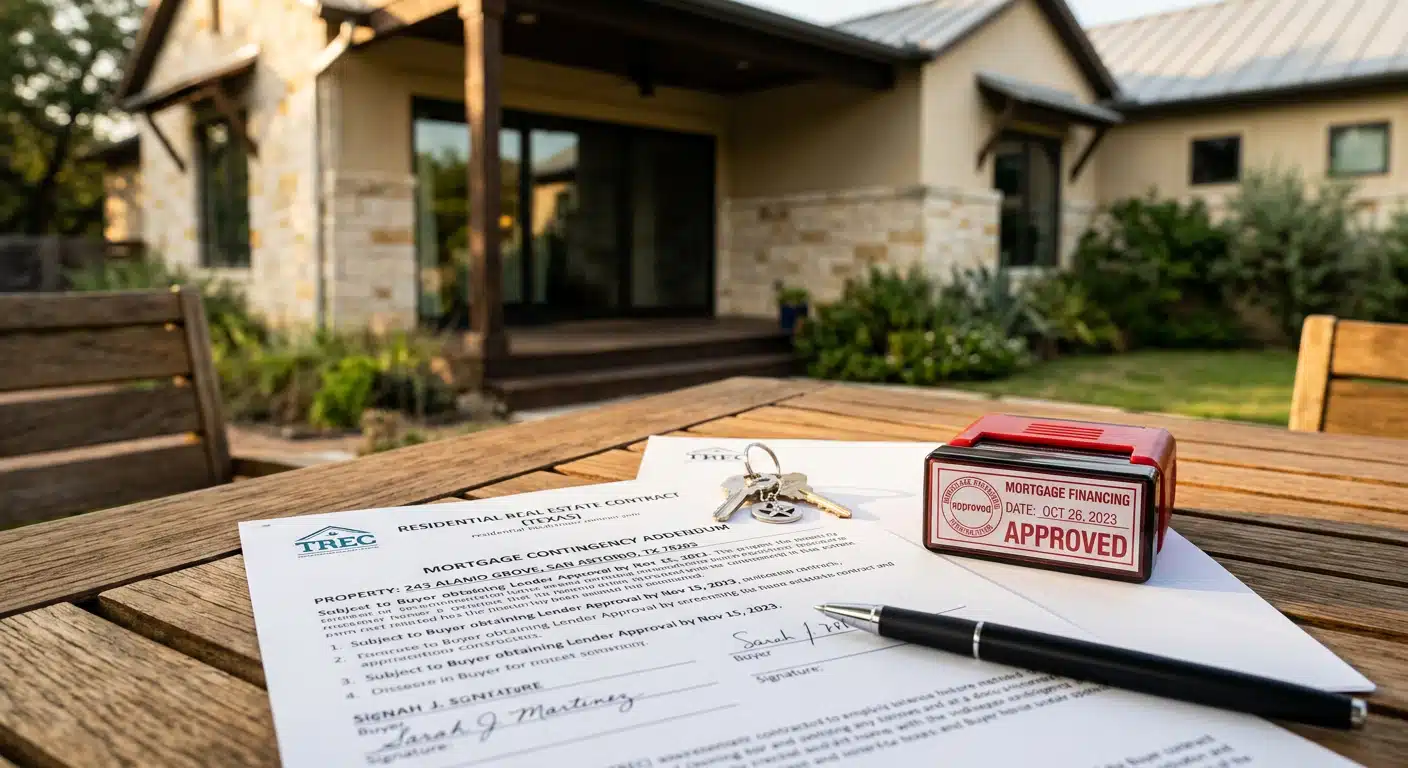
When you’re buying a home, one of the most important protections in your contract is the mortgage contingency — also known as the financing contingency. This clause ensures that if your loan falls through for reasons outside your control, you can walk away from the contract without losing your earnest money.
In a market like San Antonio — where interest rates fluctuate, lending guidelines shift, and buyers often face tight timelines — understanding the mortgage contingency is essential. Whether you’re a first time buyer or a seasoned homeowner, this guide breaks down everything you need to know about how mortgage contingencies work, why they matter, and how they protect your investment.
What Is a Mortgage Contingency?
A mortgage contingency is a clause in your purchase contract that makes the sale dependent on your ability to secure financing.
In simple terms:
If you can’t get approved for your mortgage, you can cancel the contract and keep your earnest money.
This contingency protects buyers from being forced to purchase a home without a loan — or losing thousands of dollars if financing falls through.
Why Mortgage Contingencies Matter
Buying a home is a major financial commitment, and mortgage approval isn’t always guaranteed.
A mortgage contingency protects you from:
• Loan denial
• Unexpected interest rate increases
• Changes in your financial situation
• Issues with the property that affect financing
• Appraisal problems
• Lender delays
Without this contingency, you could be legally obligated to buy the home — even if your loan is denied.
How the Mortgage Contingency Works
Here’s the step by step process:
1. You Submit an Offer
Your offer includes a mortgage contingency unless you waive it.
2. You Apply for a Loan
Most contracts require you to apply for financing within a specific timeframe (often 3–5 days).
3. The Lender Reviews Your Application
They evaluate:
• Credit score
• Income
• Employment
• Debt to income ratio
• Assets
• Down payment
• Loan type
4. The Appraisal Is Ordered
The lender orders an appraisal to confirm the home’s value.
If the appraisal comes in low, it can affect your loan approval.
5. The Underwriter Reviews Everything
Underwriting is the final approval stage.
They verify:
• Documents
• Employment
• Bank statements
• Credit
• Appraisal
• Property condition
6. If Financing Falls Through, the Contingency Protects You
If your loan is denied for a valid reason, you can:
• Cancel the contract
• Receive your earnest money back
• Walk away without penalty
What Can Cause a Mortgage to Be Denied?
Even buyers with strong financials can face unexpected issues.
Here are the most common reasons:
1. Credit Score Changes
New debt, missed payments, or credit inquiries can affect approval.
2. Employment Changes
Lenders require stable income. Job changes, reduced hours, or job loss can impact approval.
3. Debt to Income Ratio Increases
Taking on new debt (car loan, credit card, etc.) can push your DTI too high.
4. Appraisal Issues
If the home appraises low, the lender may not approve the full loan amount.
5. Property Condition Problems
Major issues like foundation damage, roof leaks, or safety hazards can affect financing.
6. Insufficient Funds
If your bank statements don’t show enough for the down payment and closing costs, the loan may be denied.
7. Lender Overlays
Some lenders have stricter guidelines than others.
What Happens If Your Loan Is Denied?
If your loan is denied and you have a mortgage contingency, you have options:
1. Cancel the Contract
You can walk away and keep your earnest money.
2. Switch Loan Programs
Sometimes a different loan type works better:
• FHA
• VA
• USDA
• Conventional
3. Switch Lenders
Some lenders are more flexible than others.
4. Renegotiate the Contract
If the issue is appraisal related, you may renegotiate the price.
How the Mortgage Contingency Protects Your Earnest Money
Earnest money is your good faith deposit — typically 1% of the purchase price in Texas.
If your loan is denied for a valid reason, the mortgage contingency ensures:
• You get your earnest money back
• You are not penalized
• You are not forced to buy the home
Without this contingency, you could lose your deposit — even if the denial wasn’t your fault.
Mortgage Contingency Timelines
Most contracts include deadlines for:
• Applying for financing
• Providing lender documentation
• Receiving loan approval
• Clearing underwriting
If you miss these deadlines, you may lose your contingency protection.
Your agent will help you stay on track.
Should You Ever Waive the Mortgage Contingency?
Waiving this contingency is extremely risky.
Buyers typically waive it only when:
• They are paying cash
• They have significant liquid assets
• They are 100% certain they will be approved
• They are competing in a bidding war
Most buyers should NOT waive this contingency.
If your loan is denied and you waived the contingency, you could lose your earnest money — or face legal consequences.
Mortgage Contingencies in New Construction
New construction adds unique challenges:
• Appraisals may lag behind rising prices
• Builders rarely reduce prices
• Delays can affect rate locks
• Loan guidelines may change during long build times
The mortgage contingency is especially important in new construction contracts.
Mortgage Contingencies in VA, FHA, and USDA Loans
VA Loans
VA loans include strong buyer protections, including the VA Amendatory Clause.
FHA Loans
FHA loans also include an amendatory clause that protects buyers from being forced to pay above the appraised value.
USDA Loans
USDA loans require strict property condition standards, making the contingency essential.
How to Strengthen Your Offer Without Waiving the Mortgage Contingency
If you want to stay competitive but still protect yourself, you can:
• Get fully underwritten before making an offer
• Increase your earnest money
• Shorten the financing timeline
• Provide a strong pre approval letter
• Work with a reputable local lender
These strategies strengthen your offer without unnecessary risk.
Final Thoughts: The Mortgage Contingency Is Essential Protection
A mortgage contingency is one of the most important safeguards in your home purchase contract. It protects your earnest money, gives you flexibility, and ensures you’re not forced into a financial situation you can’t support.
In a market like San Antonio — where lending guidelines, interest rates, and home values can shift quickly — this contingency provides peace of mind and financial security.
Buying a Home in San Antonio? We’ll Guide You Through Every Step.
As a family owned San Antonio brokerage, we help buyers:
• Understand mortgage contingencies
• Navigate financing challenges
• Work with trusted local lenders
• Protect their earnest money
• Make confident, informed decisions
If you’re preparing to buy, we’re here to guide you with clarity and care.


